


ds and beverages, all within a calorie range that fits your lifestyle.
What’s A Healthy Diet?
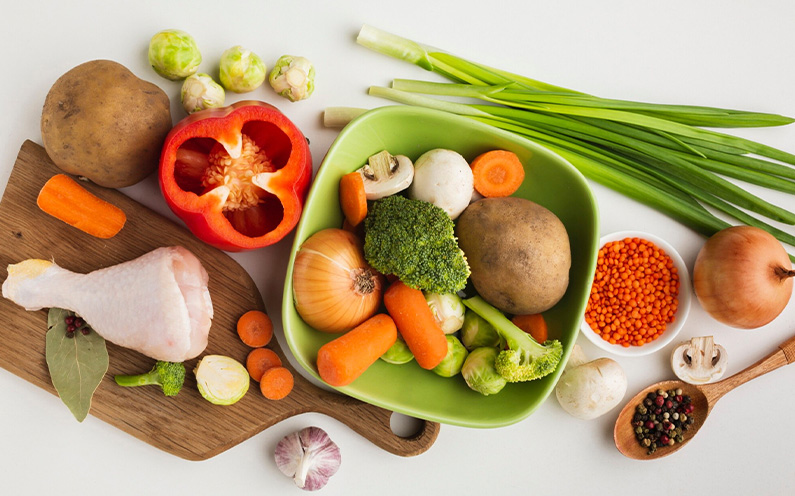
- A variety of vegetables: Dark green, red and orange veggies, starchy vegetables, and legumes like beans and peas·
- Fresh fruits: Seasonal, colorful, and nutrient-packed·
- Whole grains: Brown rice, oats, and wheat for at least half your intake·
- Low-fat or fat-free dairy: Milk, yogurt, and cheese·
- Lean protein: A mix of seafood, lean meat, poultry, eggs, and plant-based options like nuts and legumes·
- Healthy fats: Oils like olive oil and canola oil over saturated fats
The Importance of Healthy Eating
Thoughtful food choices lay the foundation for overall health and well-being. Let’s explore how small changes in our daily habits make an impact.
Overall health
A nutritious diet powers your body – from your brain to your bones. Eating well ensures you get essential nutrients like vitamins, minerals, and fiber, which help your body function at its best.
Disease prevention
A well-balanced diet reduces your risk of chronic diseases. For example, intake of enough calcium and vitamin D can decrease your risk of osteoporosis. Fresh fruits and vegetables reduce the risk of certain cancers. A diet low in saturated fats makes you less prone to heart diseases.
Healthy weight management
To maintain a healthy weight, you needn’t eat less. It’s about eating smart. Avoid fast food, processed snacks, and sugary drinks. Choose nutrient-dense, lower-calorie food like vegetables, fruits, and whole grains. Skip fad diets that cut out necessary food. They can contribute to side effects like headaches and digestive issues.
Social media share
If you like the content you can share it via